How Often Should You Repaint the Interior of Your Home?
Most homeowners can’t say when their walls were last painted. Interior paint doesn’t fail dramatically the way exterior paint does. So the question gets ignored until the walls look tired.
Interior paint wears from daily living instead of weather. A hallway and a guest bedroom in the same house can age on completely different schedules. That makes this a different question from the exterior paint lifespan most homeowners already know to track.
This covers how often each room typically needs repainting. It also covers what shortens or extends that timeline, and how to tell whether a wall needs a touch-up or a full repaint.
How Long Interior Paint Lasts in Each Room of Your Home
Most interior walls need repainting every 3 to 7 years. The range exists because rooms get used very differently. Here are the typical timelines:
- Hallways and entryways: every 2 to 3 years
- Kids’ rooms: every 2 to 4 years
- Kitchens and bathrooms: every 3 to 4 years
- Living and dining rooms: every 5 to 7 years
- Adult bedrooms: every 5 to 8 years
- Trim, doors, and baseboards: every 2 to 4 years
Trim wears faster because it takes the most contact. Ceilings can often go around 10 years.
Not sure when a room was last painted? Check old project records, ask the previous owner, or look at the label on a leftover paint can. Even a rough guess helps you place each room in its range.
Treat these as typical ranges, not deadlines. The sections below explain what pushes a room toward the short or long end.
What Shortens the Life of Interior Paint
Four things decide where a room lands in its range:
- How much the walls get touched and cleaned
- How much moisture the room sees
- How much sunlight reaches the walls
- How well the last paint job was done
These factors stack. A room can run well past or well short of the typical range, depending on how many apply.
How Foot Traffic and Cleaning Wear Down Paint
Hands, shoulders, backpacks, furniture, vacuums, and pets rub the same spots every day. That’s why hallways, stairwells, entryways, and kids’ rooms wear fastest.
Skin oils and fingerprints break down the finish gradually. Repeated scrubbing wears through low-sheen paint. That leaves shiny or blotchy patches on the wall.
Sheen makes a real difference here:
- Flat finishes look best but mark and burnish easily
- Eggshell has a slight sheen and cleans more easily, which suits bedrooms and living rooms
- Satin holds up in hallways, kids’ rooms, and bathrooms
- Semi-gloss handles frequent wiping, which suits trim and doors
The right sheen in a busy room extends its life. A room used lightly, like a formal dining room or guest bedroom, can look fresh well past the typical range.
You can test how much life a busy wall has left. Wipe a small, hidden patch with a damp cloth. If color comes off or the sheen changes, the finish has worn thin.
How Moisture Shortens Paint Life in Hendersonville, NC
Steam from showers and cooking softens and stains paint. Grease in kitchens does the same. That’s why bathrooms and kitchens run 3 to 4 years instead of 5 to 7.
Western North Carolina’s mountain humidity adds another layer. Damp air slows drying and encourages mildew in rooms without good ventilation. A few habits help:
- Run exhaust fans during and after showers
- Use moisture-resistant paint in bathrooms and kitchens
- Wipe up window condensation before it sits
Check the ceiling above the shower and the wall beside the tub. Small dark spots that return after cleaning are usually mildew, not dirt. They signal that the paint is already struggling.
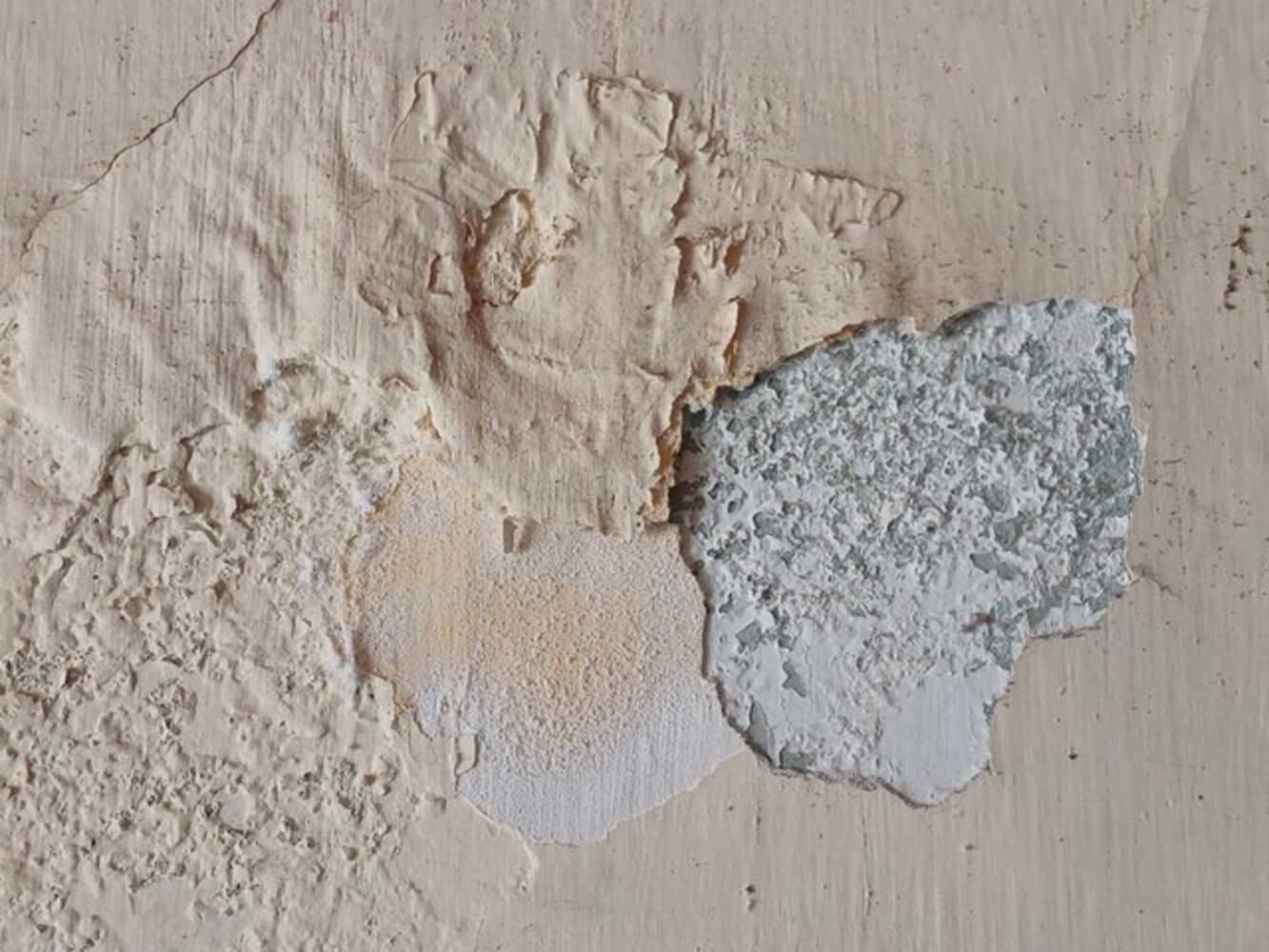
Peeling, bubbling, or soft drywall points to a bigger problem. Moisture is getting into the wall. Fix that cause first, because repainting over it just repeats the failure.
How Sunlight Fades Interior Paint
Ultraviolet light breaks down pigments over time. Walls that get strong direct sun fade unevenly, often in a visible patch near the window.
Rooms with large windows tend to run toward the short end of their range. Homes built to take in mountain views often have plenty of glass. South and west exposure fades paint fastest, while north-facing rooms hold color longer.
Dark and saturated colors show fading more than light neutrals. The effect often becomes obvious behind furniture or artwork that shielded part of the wall. Most people only notice when they move a picture frame and see the difference.
You can measure it yourself. Compare the sunniest wall with the same color inside a closet or behind a large piece of furniture. A clear difference means the paint has faded enough to refresh.
How Prep and Paint Quality Affect Paint Life
The previous paint job matters as much as the room. Walls painted without cleaning, patching, or priming can start failing within a few years. Proper surface preparation is what lets paint bond and last.
Other shortcuts shorten the lifespan too:
- Skipping the second coat
- Using budget paint that wears thin
- Painting over dust, grease, or glossy patches
A well-prepped job with quality paint can outlast the typical range. That’s why two identical rooms can age differently. If you don’t know how the last job went, assume the short end of the range.
How to Adjust These Timelines for Your Own Home
Start with the room’s typical range. Then move earlier or later based on the four factors.
Move earlier for:
- Heavy daily traffic, kids, or pets
- Frequent cleaning
- Steam, grease, or poor ventilation
- Strong direct sun
- A previous job with rushed or unknown prep
Move later for:
- Light use
- Good ventilation
- Shaded exposure
- Quality paint with proper prep
Here’s a quick example. A hallway with two kids, a bright window, and a rushed past paint job might need paint in 2 years. A seldom-used guest room with solid prep might still look fine at 8. Same house, very different numbers.
Kitchens work the same way. A kitchen with a busy cooktop and weak ventilation might need paint at 3 years. The same kitchen with a strong range hood could stretch to 5.
Walk through your home in natural light to test your estimate. Look at each wall from a few angles. Daylight shows fading, scuffs, and patchy spots that lamps hide. Jot down each room’s estimate on a simple list so you can track what’s coming due.
What Signs Show It’s Time to Repaint Interior Walls
Walls tell you when they need attention. The signs fall into two groups. Some are small problems that a wash or touch-up can solve. Others mean the paint has run its course.
Telling them apart prevents repainting too early. It also prevents putting off a repaint that’s already overdue.
What Signs Mean a Touch-Up Will Do
A few small marks usually respond to light treatment:
- Scuffs and nicks near switches or corners
- Isolated marks that wipe away with gentle cleaning
- Small spots that a dab of leftover paint can cover
Touch-ups work best when the paint is still in good shape overall. On older or faded paint, a spot touch-up often shows as a visible patch. The new paint no longer matches the surrounding wall.
What Signs Mean You Need a Full Repaint
These signs mean the finish itself has worn out:
- Fading or uneven color
- Stains that return after cleaning
- Paint that won’t wipe clean
- A dull, chalky surface
- Smoke damage, water damage, or patchy repairs
Peeling, cracking, or bubbling means finding the cause first, as covered in the moisture section. Repainting over an active problem repeats the failure.
A remodel also calls for a fresh coat across the whole wall. So does a color you’ve simply outgrown, even when the paint is technically fine. If a sale is on the horizon, it helps to see how paint and resale value connect.
What to Do Once You Know Where Your Walls Stand
After checking each room, most homeowners find a short list of rooms that are due. A longer list can wait.
Painting the overdue rooms first keeps costs manageable:
- Hallways and entryways usually come first
- Kitchens and bathrooms come next
- Bedrooms and living areas can follow later
This puts the whole house on a rolling schedule instead of one large project.
If you can’t tell whether a room needs a touch-up or a full repaint, a walkthrough settles it quickly. It can also show whether a stain points to a moisture problem. Knowing what a professional interior painting project involves makes the next step easier to plan.
There’s no pressure to book. Many homes have rooms that can wait another year or two. When you’re ready, A2 Painting offers interior painting services across Hendersonville and Western North Carolina. Request a free quote and we’ll look at your walls with you.