Why Proper Surface Preparation Matters Before Interior Painting
Most homeowners spend time choosing the right paint color, debating sheen levels, and selecting a brand. What gets less attention is the condition of the walls before any of that paint goes on. That oversight is where most paint jobs fall short.
Proper surface preparation is the work that happens before painting begins — and it is the single biggest factor in whether a paint job looks right, holds up, and lasts. Understanding why proper surface preparation matters before interior painting means understanding what prep actually does to the surface, and what the absence of it sets in motion.
This blog breaks down what the preparation process involves, how it directly affects adhesion, smoothness, and longevity, and what goes wrong when it gets skipped or rushed.
What the Surface Preparation Process Involves
Surface preparation is not a single task completed before painting begins. It is a sequence of distinct steps, each one addressing a specific condition that affects how paint performs on the wall.
The process starts with cleaning. Walls accumulate grease, dust, dirt, and residue from previous coatings — none of which paint can bond to reliably. Cleaning removes those contaminants and gives the surface a consistent base to work from.
Repairs follow. Holes, cracks, damaged drywall, and deteriorated joint compound all need to be filled and patched before painting. Surface irregularities that go unaddressed at this stage will be visible in the finished coat.
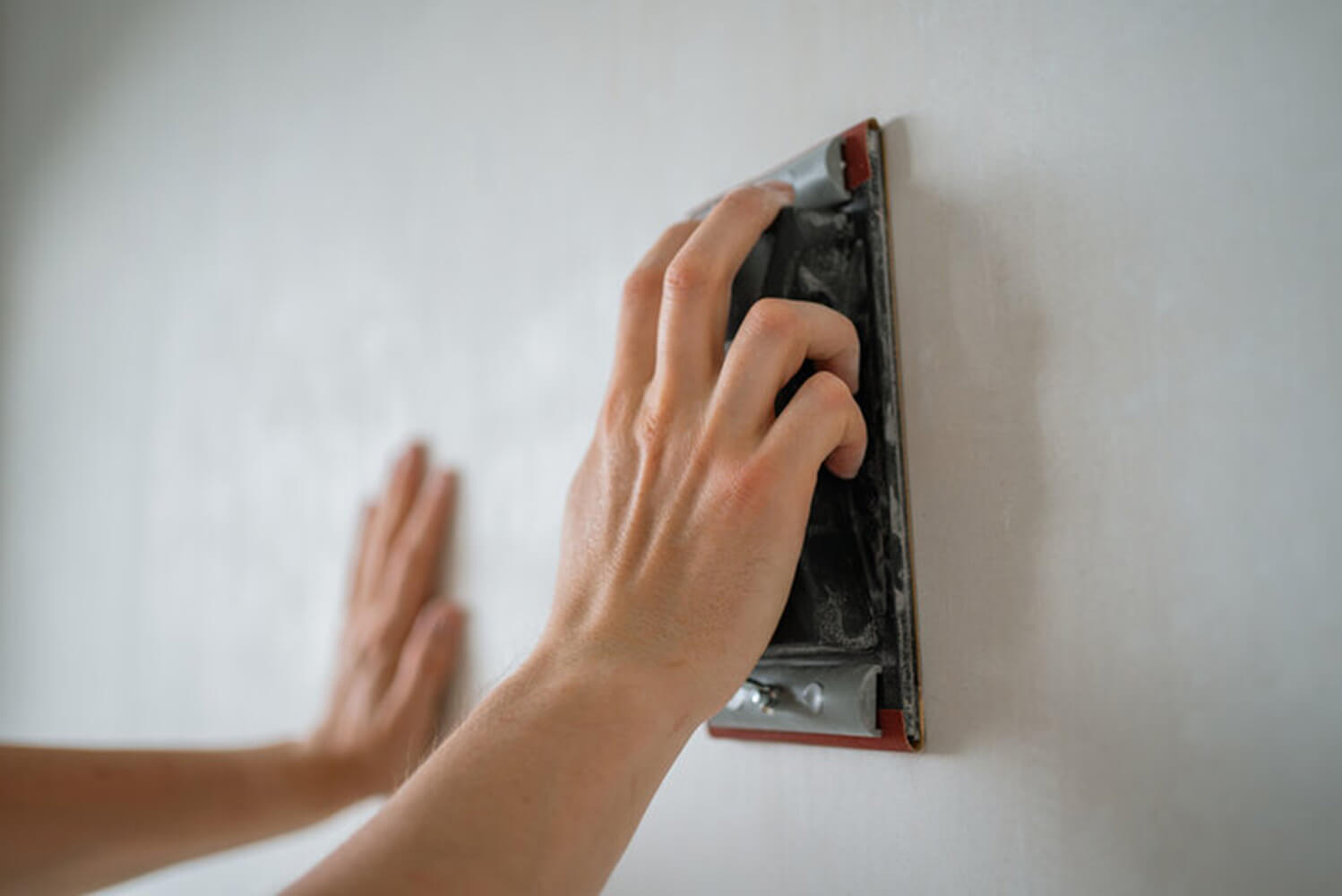
Once repairs are complete, sanding smooths the transitions between patched and unpatched areas, scuffs existing surfaces to improve mechanical adhesion, and levels filled areas flush with the surrounding wall. Sanding is not optional — it is what makes the surface uniform enough to paint.
Priming is the final step before paint is applied. Primer seals the surface, equalizes porosity across different materials and repaired areas, and creates a consistent base the topcoat can bond to. Without it, paint applied over bare drywall, fresh patches, or previously painted surfaces will perform inconsistently at best.
Each of these steps builds on the one before it. Skipping or shortcutting any one of them affects every step that follows — and ultimately, the finished result.
Why Surface Preparation Matters to the Finished Paint Job
Surface preparation does not serve one purpose. Every step in the process has a direct effect on how the finished paint job looks, how it performs under daily use, and how long it holds up before it needs attention again.
Adhesion, smoothness, and longevity are not separate outcomes that happen independently. They are all products of the same preparation work. A surface that was properly cleaned, repaired, sanded, and primed gives paint the conditions it needs to bond correctly, apply evenly, and resist wear over time. A surface that skipped those steps produces the opposite.
The following sections break down how each dimension of the finished result connects directly to what happened during preparation.
Paint Adhesion Starts at the Surface
Paint does not bond to a dirty wall. Grease, dust, chalk, and residue from previous coatings all interfere with adhesion at the point of contact. A wall that looks clean is not necessarily a wall that is ready to paint.
Sanding plays a role that most homeowners underestimate. When paint is applied to a smooth, unprepared surface, it has little to mechanically hold onto. Sanding creates a subtle profile in the surface that gives the coating something to grip. That profile is not visible to the eye but it makes a measurable difference in how well paint holds over time.
Primer completes the adhesion foundation. It is formulated specifically to bond to the substrate beneath it and to provide the topcoat with a consistent, stable surface to adhere to. Paint applied directly to an unprimed wall, bare drywall, or a fresh patch is working against itself from the first coat.
Surface Condition Controls the Smoothness of the Finish
Paint follows the surface beneath it. It does not fill, smooth, or hide what is there. A crack reads through as a crack. A raised texture reads through as a raised texture. Anything left unaddressed during preparation becomes part of the finished coat.
Filling imperfections, sanding repaired areas flush, and smoothing transitions between materials is what creates a surface that paint can cover evenly. That work is the difference between a paint job that looks flat and professional and one that draws the eye to every flaw on the wall.
Sheen level raises the stakes. Higher sheens reflect more light, and reflected light makes surface variation visible in ways that flat finishes do not. A semi-gloss or gloss finish applied to a wall with minor surface irregularities will reveal every one of them. The higher the sheen, the more thorough the preparation needs to be.
Proper Preparation Extends the Life of the Paint Job
A properly prepared surface gives paint the conditions it needs to perform for its full expected lifespan. A surface that skipped preparation does not.
Paint that bonds correctly resists the forces that cause early failure. That resistance comes from the bond, and the bond comes from preparation. When the surface is properly cleaned, repaired, sanded, and primed, the coating has what it needs to hold up under real conditions. When those steps are missing, the coating is working against the surface from day one.
The conditions that most commonly shorten a paint job’s lifespan include:
- Residual grease or contamination that prevents the coating from bonding fully
- Unsealed stains that bleed through and destabilize the finish over time
- Unresolved moisture issues that work beneath the coating after it dries
- Fresh patches that were not primed, causing inconsistent absorption and early cracking
None of these conditions disappear under paint. Preparation is the stage where they are identified and resolved before they can compromise the finish.
What Happens When Prep Work Gets Skipped or Rushed
Skipping or rushing surface preparation does not just affect how a paint job looks on day one. It sets up a failure sequence that develops over time and compounds the longer it goes unaddressed.
The most immediate consequence is adhesion failure. When the surface was not properly cleaned, sanded, or primed, paint does not bond the way it needs to. It begins separating at edges, corners, door frames, and high-contact areas. What starts as a small section of peeling spreads as moisture and handling work beneath the surface. Repainting over it without stripping and re-prepping buries the problem temporarily and makes it worse.
Texture and color problems follow once the paint is on the wall. The most common results include:
- Surface defects showing through the finished coat, especially under direct or angled light
- Repaired areas that were not sanded flush leaving visible ridges in the finish
- Inconsistent priming causing uneven absorption and a patchy appearance across the wall
Shortened paint life is the cumulative outcome. A job that skipped prep may look acceptable at first but fails well ahead of schedule. The time saved during prep is paid back many times over in a shortened project lifespan and an earlier return to repainting.
The Foundation of a Paint Job That Actually Lasts
The quality of an interior paint job is decided before the first coat of paint goes on. Every element that determines whether a paint job looks right, holds up under daily use, and reaches its full lifespan traces back to what happened during preparation. That is not a minor detail of the process. It is the foundation the entire project is built on.
A paint job is only as good as the surface it is applied to. Proper surface preparation is what separates a finish that holds from one that begins failing ahead of schedule. Adhesion, smoothness, and durability are not outcomes that paint delivers on its own. They are outcomes that preparation makes possible.
When interior painting prep work is done correctly, the results speak for themselves: even color, a smooth finish, and a coat that holds up the way it was designed to. When it is skipped or rushed, no amount of quality paint recovers what was lost at that stage.
If you have an interior painting project coming up and want it done right from the start, we would welcome the conversation. At A2 Painting, surface preparation is where every project begins. Reach out to our team to discuss your project and learn how we approach the work that makes the finish last.