How a Professional Interior Painting Project Works from Start to Finish
Understanding how a professional interior painting project works helps you know what to expect. Before the first drop cloth goes down, you should already know the shape of the whole job. Many homeowners get a price, pick a start date, and hope for the best. But a well-run project doesn’t happen by accident. It follows a specific sequence. Each stage protects the one that comes after it.
Skip a step, and the result shows up later. Sometimes that means peeling paint. Sometimes it’s an uneven finish that shows up months down the road. Understand the sequence instead, and you gain a real way to judge the crew working in your home. Think of this as the interior painting process explained in the order it actually happens, start to finish.
This guide walks through the full sequence. It starts with your first phone call and ends at the final walkthrough. Along the way, you’ll get a real day-by-day timeline example. You’ll also see how your local climate affects the schedule, and what separates a rushed job from a properly run one.
What Happens During the Initial Consultation and Walkthrough
Every project starts with an inquiry. Usually that’s a call, a form, or a text. From there, a professional painter schedules an in-home walkthrough. During that visit, the painter checks your wall and ceiling condition. They look at trim and doors. They note anything that could affect the scope, including access issues like furniture placement or tight stairwells.
This walkthrough matters more than most homeowners realize. A phone-only quote skips this step entirely. That’s a common reason prices balloon once the crew arrives. An in-person look catches things a phone call can’t. Water stains. Old patch jobs. Glossy walls that need extra sanding.
During the consultation, expect a conversation that covers:
- The rooms and surfaces being painted, and anything excluded
- Color and sheen preferences for each space
- Existing damage or repairs that could affect prep
- Whether you’re refreshing one room or repainting the whole house
Show up with a rough idea of colors and a list of rooms. Mention any scheduling concerns up front, including pets or a work-from-home schedule. You’ll get more out of the visit that way, and the painter can plan the sequence around your life instead of guessing.
What a Professional Quote Should Include
A real quote spells out labor, materials, and the number of coats. It states which prep work the price includes. It includes a project timeline. A good quote reads like a plan, not just a number.
Vague pricing tends to leave prep work out. A flat rate per room, with no other detail, is a warning sign. That gap often turns into an unexpected charge once the crew finds more damage than the walkthrough caught.
Two full coats and minor drywall repair should be standard parts of the quote. They shouldn’t show up as upsells later. If your quote doesn’t mention them, ask. A contractor who puts everything in writing, including what happens if hidden damage turns up, shows you how they’ll run the rest of the job.
How Your Home Is Prepared Before Any Paint Goes On
Prep is the biggest phase of the project by time. It’s also the single biggest factor in how the finished paint job holds up. A wall that wasn’t cleaned, patched, and sanded properly will show every flaw once the light hits it. That’s true no matter how good the paint is.
Protecting Furniture, Floors, and Fixtures
Before any surface work begins, the crew protects your space. The crew moves furniture to the center of the room or covers it in place. The crew covers floors with drop cloths. The crew tapes off trim, windows, doors, and hardware.
This step keeps splatter and drips off your belongings. It also clears room for the crew to move efficiently once painting starts. The crew usually asks you to clear small or valuable items yourself ahead of time. A separate guide covers exactly what to do before a crew arrives to prep your home for painting, and what you can safely leave for them to handle.
This stage stays invisible once the job wraps up. But rushing it is where avoidable damage happens.
Cleaning, Patching, and Repairing Surfaces
Once the crew protects the room, attention shifts to the walls. The crew cleans surfaces to remove dust and grease. The crew sands glossy or rough spots. The crew patches nail holes, cracks, and minor drywall damage. Caulking seals gaps along trim and corners for cleaner lines.
Paint doesn’t bond evenly to a dirty or glossy surface. Any imperfection left unpatched will show through even a high-quality topcoat once the light hits it directly. Extra coats can’t make up for weak prep, either. Two coats over bad prep still show the same flaws, just twice as thick.
This stage most affects whether your paint job looks sharp for years, or starts showing wear within months. A deeper breakdown of why surface prep carries so much weight covers what happens at each step, and what skipping it sets in motion.
What Happens During Paint Application in a Professional Interior Painting Project
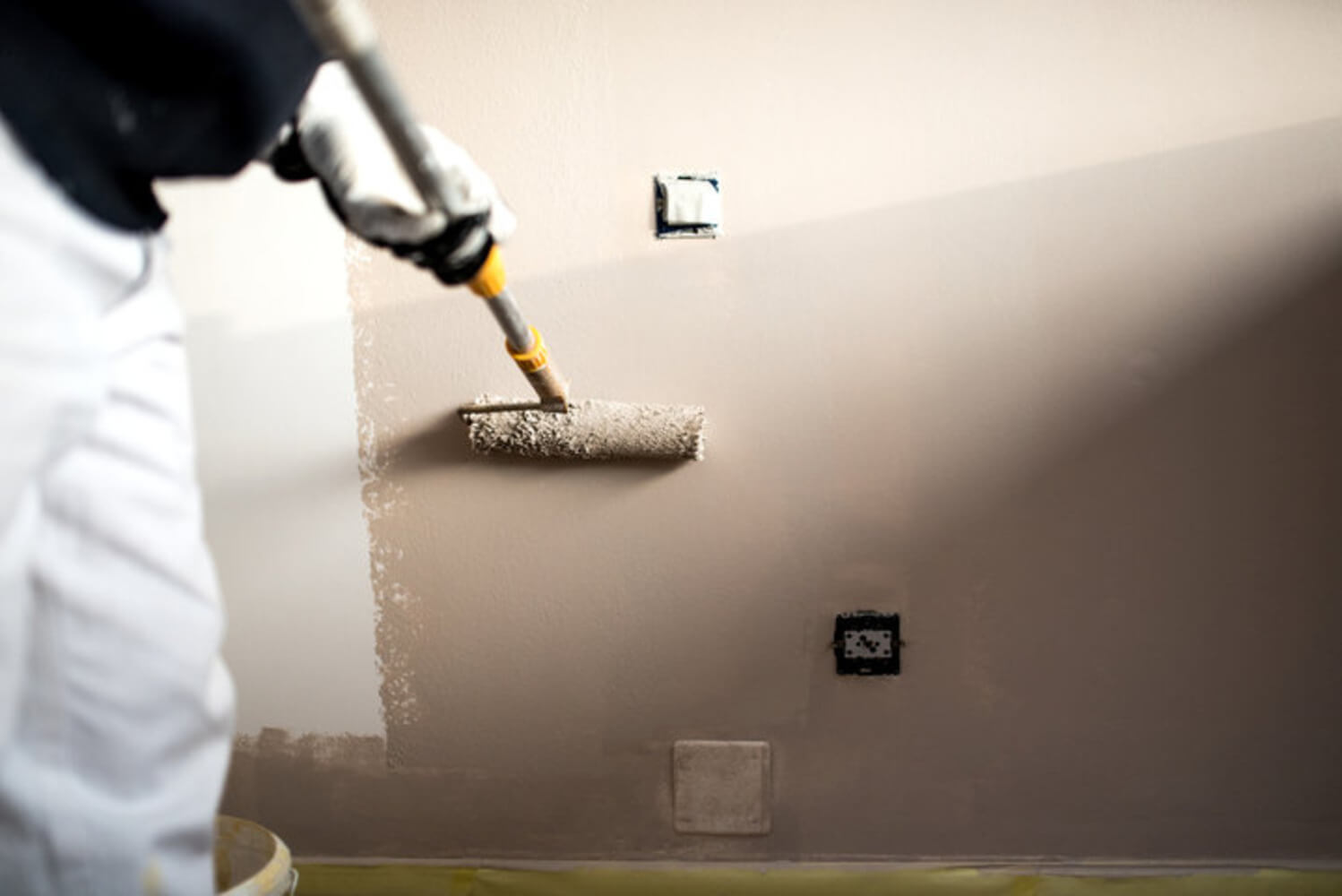
Once prep wraps up, the crew moves to application. Brushes handle cutting in edges and detail work. Rollers cover walls and ceilings. Spray equipment sometimes handles trim or doors, where a smoother finish matters most.
Application usually follows a rhythm. One coat goes on, then a drying period, then additional coats as needed. Expect some paint smell during the day. Expect limited access to rooms while paint is still wet. Both fade quickly once the coat dries.
The finish matters here too. Flat and eggshell finishes hide surface imperfections best, which is why they work well in bedrooms and living rooms. Satin and semi-gloss hold up better against handprints and daily wear, which is why crews often use them in hallways, kitchens, and bathrooms.
A crew that keeps drop cloths in place, tools organized, and the space usable at the end of each day is running a controlled process. That’s different from a crew just pushing through a checklist.
Why Drying Time and Curing Time Are Not the Same Thing
Paint can feel dry to the touch within a few hours. But full curing takes much longer. Curing is when the coating reaches its maximum hardness and durability. That distinction matters, because a wall that looks finished is still vulnerable during the cure window.
In Hendersonville and across Western North Carolina, mountain humidity can slow indoor drying. It can stretch out that cure window compared to drier climates. That’s part of why an experienced crew plans coat timing around actual conditions, not a fixed schedule.
Treating a dry wall like a cured one is a common mistake. Scrubbing it, hanging heavy items, or using harsh cleaners too soon can damage a brand-new paint job. As a general guideline, wait seven to ten days before driving nails or hanging anything heavy.
How Long the Process Actually Takes, Day by Day
Timelines vary by project size. A concrete example makes the sequence easier to picture. A single room usually wraps prep, painting, and touch-ups in about a day. A full living room with real prep work often runs one to two days.
For a larger project, a realistic interior painting project timeline might look like this:
- Day one: setup, furniture protection, and full surface prep
- Day two: first coat across the project, with drying time built in
- Day three: second coat, detail work, and touch-ups
- Additional days: added for more rooms, higher ceilings, or heavier repair needs
A whole-house interior repaint can run three to eight working days. That depends on square footage, ceiling height, and how much trim and repair work the project involves. Prep needs and humidity are the two biggest factors that stretch or compress that window.
Knowing roughly how the days break down helps you plan around the project. You won’t be guessing how long each room stays out of use.
What Happens at the Final Walkthrough
Before the crew considers the job finished, the protective materials come down. Tape comes off trim and windows. Any hardware the crew removed goes back on. Then the crew checks for missed spots, uneven coverage, or rough cut lines. Touch-ups happen on the spot.
A final walkthrough with you comes next. You’ll review each painted area together. The crew addresses anything you flag before they leave. The crew typically labels leftover paint with the room, color, and finish, so future touch-ups are easy to match.
A project that ends with a real walkthrough and labeled paint is one where the contractor stands behind the result. That’s different from a crew that just packs up and leaves.
What This Process Reveals About the Contractor You Hired
Every phase in this process works as a checkpoint. The consultation. The quote. Prep. Application. Curing. The walkthrough. Each one either protects quality or lets it slip.
A contractor who documents the quote in detail, protects your home during prep, and closes the job with a real walkthrough is showing you that the process works. Skipped or rushed steps at any phase are usually the earliest warning sign of problems that show up later.
Now you know what a properly run project looks like. You’re in a much better position to judge any quote against it. If you’re planning an interior repaint in Hendersonville or anywhere in Western North Carolina, we’d be glad to walk you through how our process works room by room. Reach out to A2 Painting for a free, written quote, or learn more about what’s included in our interior painting projects.