How Long Does Exterior House Paint Last in Hendersonville NC
Most homeowners have a rough idea that exterior paint does not last forever. What they rarely have is a clear sense of how long it is actually supposed to last in their specific area. The national averages that come up in a quick search are a starting point, but they do not account for where you live or what your home’s exterior is up against year after year.
In Hendersonville, the answer looks different than it does in drier, milder climates. Western NC’s combination of rainfall, humidity, UV exposure, and seasonal temperature swings puts exterior coatings under a level of stress that compresses timelines and narrows the window between a coating that is aging and one that has failed.
Understanding how long exterior house paint lasts in this region helps homeowners plan ahead, set realistic expectations, and catch the right moment to repaint before the surfaces underneath start paying the price.
What the General Exterior Paint Lifespan Looks Like by Surface
Before getting into what Hendersonville’s climate does to those timelines, it helps to understand what the baseline looks like. Paint manufacturers and industry standards publish expected lifespans for exterior coatings under normal conditions — moderate climate, proper surface preparation, quality application. These figures represent what a well-executed paint job can achieve when conditions cooperate.
By surface material, those baseline ranges generally look like this:
- Wood siding: 5 to 7 years
- Fiber cement siding: 10 to 15 years, depending on the product and exposure level
- Stucco: 5 to 10 years, depending on the condition of the base coat
- Brick and painted masonry: 10 or more years in moderate conditions
These are ceilings, not guarantees. They assume the surface was properly cleaned, repaired, and primed before paint went on, and that the climate is not placing unusual stress on the coating. In harsher environments, these numbers compress. Hendersonville falls into that category.
How Hendersonville’s Climate Affects How Long Exterior Paint Lasts
Western NC’s climate is more demanding on exterior coatings than most homeowners realize. Hendersonville sits at elevation, receives significant annual rainfall, maintains elevated humidity for much of the year, and experiences meaningful UV exposure alongside seasonal temperature swings. These forces do not take turns — they work on exterior paint simultaneously, and their combined effect is what makes this region particularly hard on exterior coatings.
Humidity and Rainfall Put Constant Pressure on Exterior Coatings
Hendersonville receives around 50 inches of rainfall annually and maintains elevated humidity levels across much of the year. That sustained moisture exposure is one of the primary drivers of early exterior paint failure in this region.
Moisture compromises exterior coatings in two distinct ways:
- It works beneath the paint film where adhesion is not complete, causing bubbling, blistering, and peeling as it pushes the coating away from the substrate
- It feeds the biological growth — mold, mildew, and algae — that colonizes paint surfaces and degrades the coating from the outside
Wood surfaces are the most vulnerable. Elevated moisture causes wood to expand and contract repeatedly as it absorbs and releases water. That movement stresses the paint film over time and accelerates cracking and separation at edges, seams, and anywhere two surfaces meet.
UV Exposure in Western NC Accelerates Surface Degradation
At Hendersonville’s elevation, UV intensity is meaningfully higher than at lower elevations. That increased UV load breaks down the binders and pigments in exterior paint, causing fading, chalking, and surface brittleness over time.
South and west facing walls take the most direct exposure and typically show degradation first. A home that looks fine on the shaded north side may have paint that is already breaking down on the sun-facing elevations. UV degradation is cumulative and gradual, which means by the time fading and chalking are clearly visible, the coating has already lost a significant portion of its protective capacity.
Seasonal Temperature Shifts Stress the Paint Film Over Time
Western NC experiences meaningful temperature variation between seasons alongside significant day-to-night swings, particularly in spring and fall. Paint expands in heat and contracts in cold. That repeated thermal cycling causes the paint film to flex constantly.
Over time, that flexing leads to micro-cracking, particularly at:
- Seams and edges where paint has less flexibility
- Areas where two different materials meet, such as wood trim against fiber cement siding
- Spots where the paint film is thinner due to uneven application
These cracks are entry points for moisture. Once moisture gets beneath the coating, the deterioration cycle accelerates significantly regardless of how the rest of the surface is holding up.
Other Factors That Influence How Long Exterior Paint Holds Up
Climate is the dominant force on exterior paint longevity in Hendersonville, but it is not the only one. Several other factors can extend or compress the timeline beyond what regional conditions alone would produce.
Surface preparation quality is one of the most significant. Paint applied over inadequately cleaned, repaired, or primed surfaces fails earlier regardless of what the climate is doing. A job done with thorough preparation consistently outlasts one that cut corners at that stage, sometimes by several years.
Application quality matters as well. Paint applied in poor weather conditions, at incorrect film thickness, or without appropriate primers will underperform its rated lifespan even in a more forgiving climate. In Hendersonville’s environment, application errors compound quickly.
Maintenance history between paint jobs also plays a role. Homes that receive regular attention hold their coating longer. The most impactful maintenance habits include:
- Pressure washing at regular intervals to remove biological growth and surface buildup before it degrades the coating
- Keeping caulk in good condition at windows, doors, and trim to prevent moisture from working behind the siding
- Addressing minor paint failures early rather than allowing them to spread
Finally, shaded areas and tree coverage create microclimates on the home’s exterior. Surfaces that stay damp due to shade or proximity to vegetation are significantly more susceptible to biological growth and moisture-driven failure than surfaces receiving consistent airflow and sunlight. A home with heavy tree cover may see failure develop faster on certain elevations regardless of how the rest of the exterior is holding up.
What to Watch for When the Repaint Window Is Approaching
The repaint window is not a fixed date — it is a condition. Homeowners who know what to look for can identify when their exterior paint is approaching the end of its effective life before it fails completely. Catching it at the right stage means a more straightforward project. Missing it means more repair work before paint can go on.
The signs to watch for include:
- Fading and chalking: Chalking is the powdery residue left on your hand when you run it along the siding. It means the paint’s binder is breaking down. The coating is still on the surface but is no longer performing its protective function at full capacity.
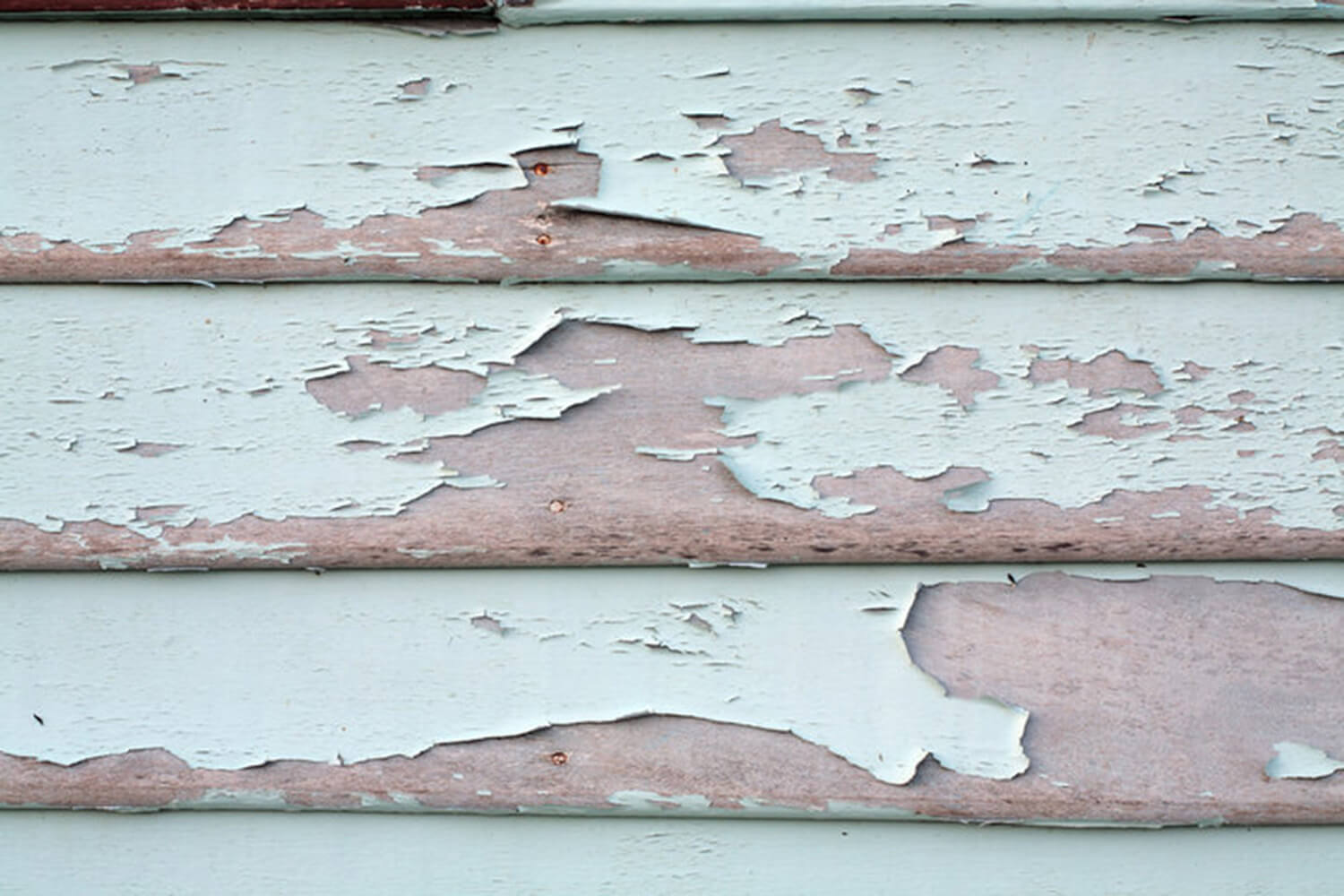
- Cracking and peeling: Fine surface cracks may still be addressable with proper preparation and recoating. Deeper cracking and active peeling mean adhesion has already been lost and the surface beneath may already be exposed to moisture.
- Biological growth that returns quickly after cleaning: If mold, mildew, or algae recolonize within a short period after being removed, the paint surface has degraded to the point where it is no longer resisting growth the way a sound coating would.
- Failing caulk around windows and doors: Caulk and paint age on a similar timeline. When caulk is cracking, shrinking, or pulling away from the surface, the paint system is typically reaching the end of its effective life as well. Failing caulk is a reliable signal to evaluate the full exterior, not just seal the gaps and move on.
None of these signs require an expert to identify. A careful walk around the home with these conditions in mind gives a homeowner a clear enough picture to know whether a professional evaluation makes sense.
What an Exterior Evaluation Tells You Before You Commit to a Repaint
Exterior paint lifespan in Hendersonville is shorter than national averages suggest. The combination of rainfall, humidity, UV load, and temperature cycling puts coatings under consistent stress, and the window between a coating that is aging and one that has failed is narrower than homeowners often expect.
The difference between catching that window early and missing it is significant. A repaint done at the right time is a straightforward project. One done after the coating has failed requires repair work first — addressing rot, replacing damaged substrate, resolving moisture issues — before paint can go on. The cost and scope of those repairs can exceed the paint job itself.
A professional exterior evaluation assesses the actual condition of the coating across all elevations of the home, identifies areas of concern, and gives a clear picture of where the exterior stands. It does not require committing to a full project. It gives homeowners the information they need to decide when and how to act.
If you are uncertain about the condition of your home’s exterior paint, we are glad to take a look. At A2 Painting, we assess the full exterior and give homeowners a straightforward read on what the coating needs and what the timeline looks like for their property. Reach out today to schedule an evaluation.