Before: What the House Looked Like
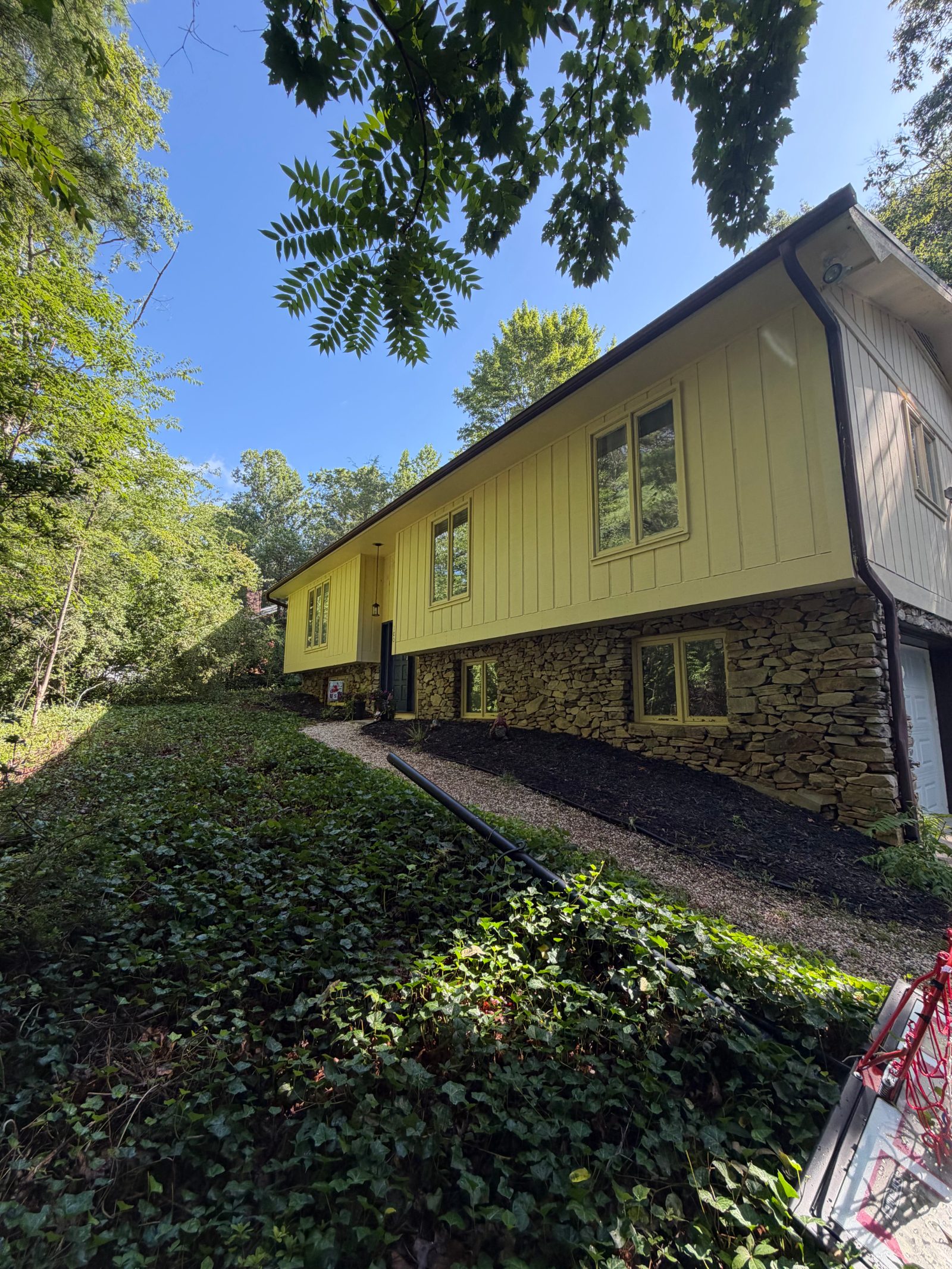
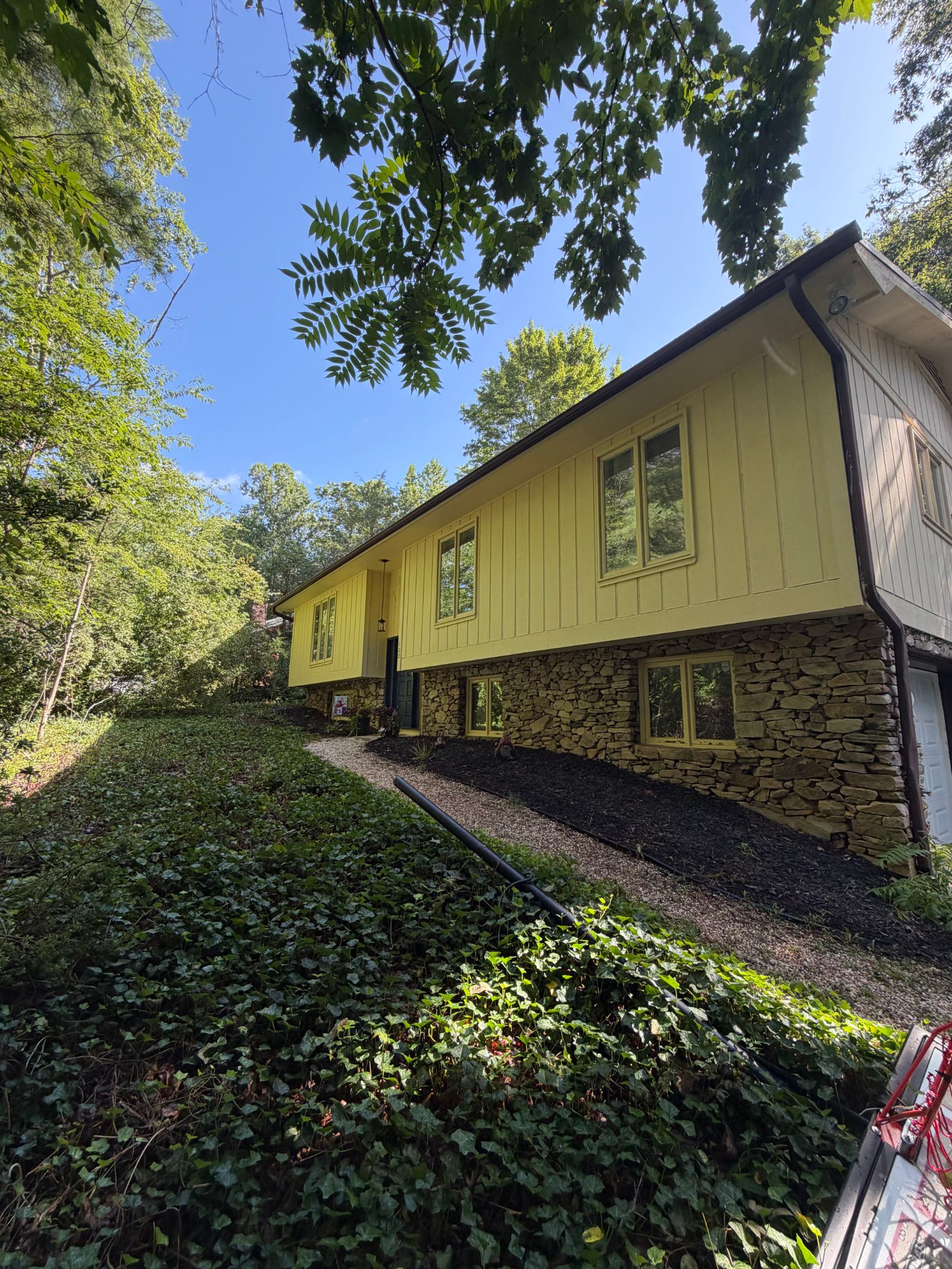
The yellow paint on this house had stopped doing its job. By the time A2 Painting got out to the property in Saluda, NC, the finish was faded, cracked, and worn thin from years of sitting out in the weather. The homeowner wanted two things out of the project: a house that looked fresh again, and an exterior that was actually protected going forward.
Full exterior, start to finish. Here's how the job ran.
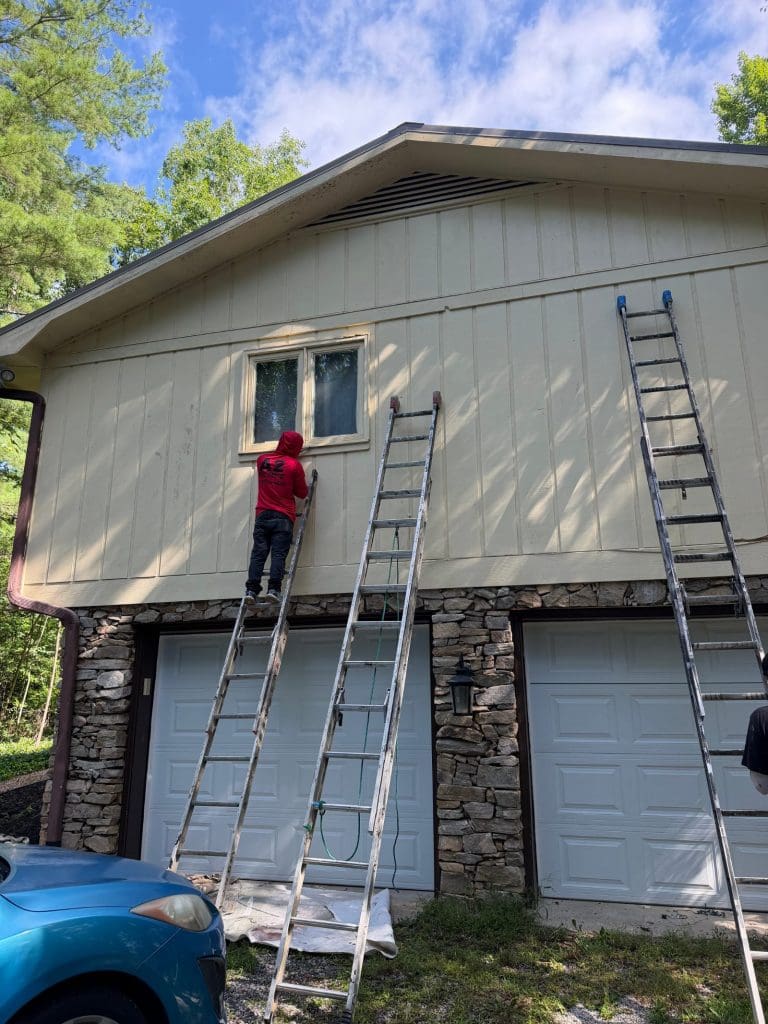
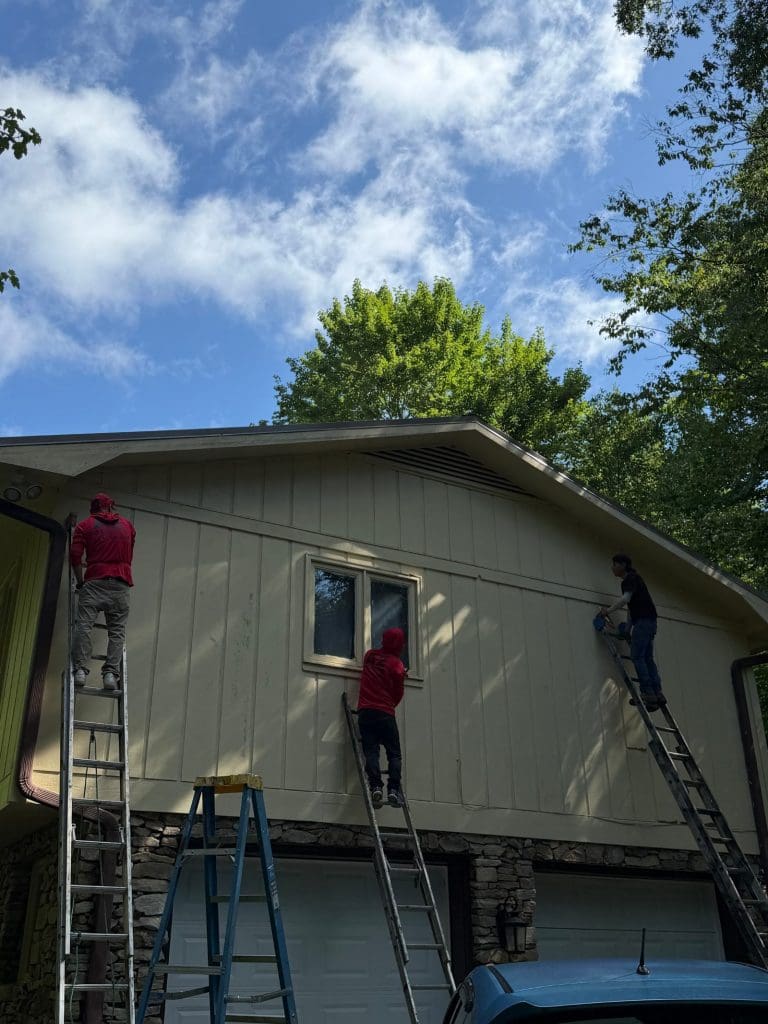
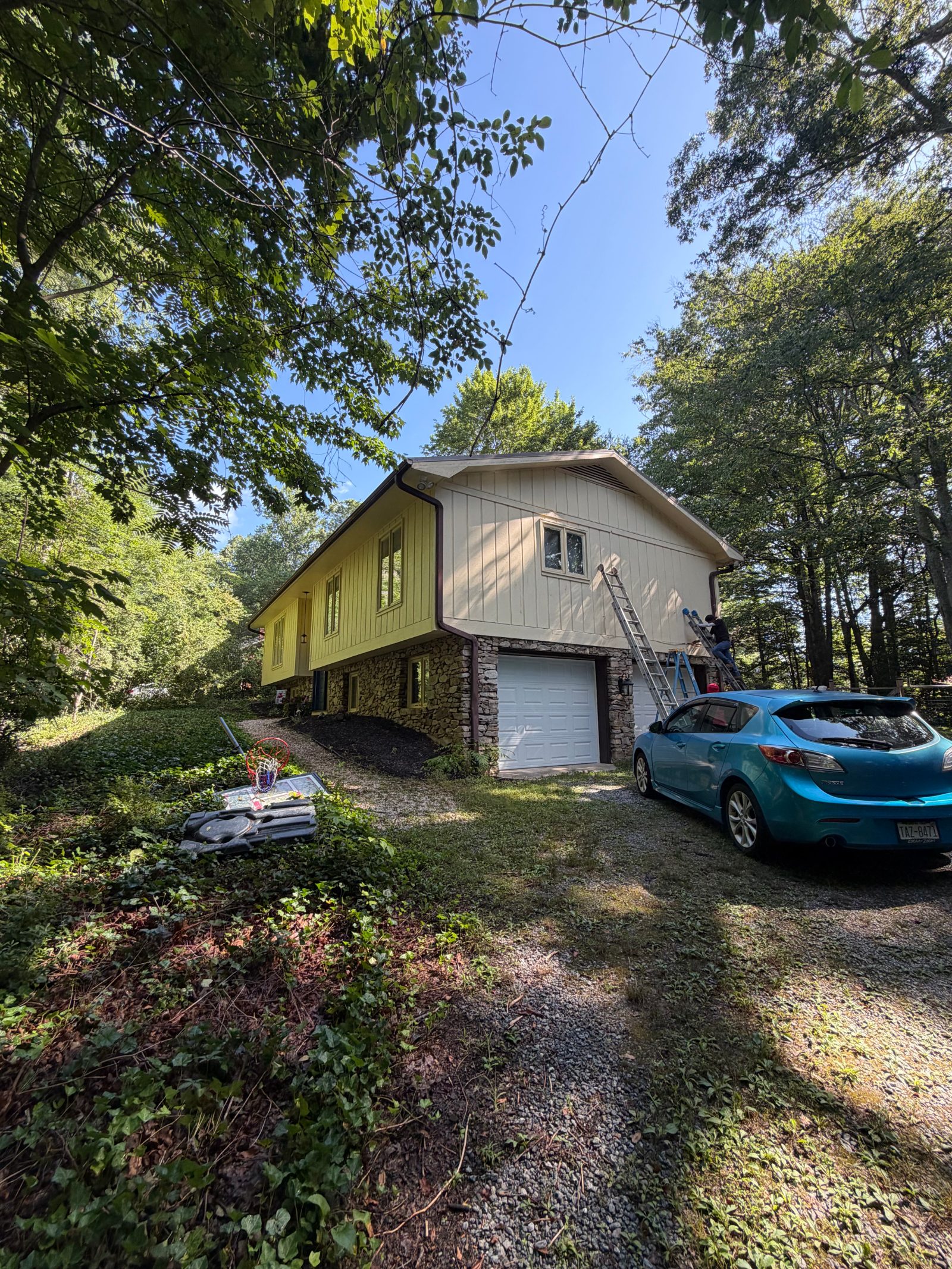
Yellow siding, stone at the base, and a finish that had clearly been up there a long time. That's what the crew walked up to on day one.
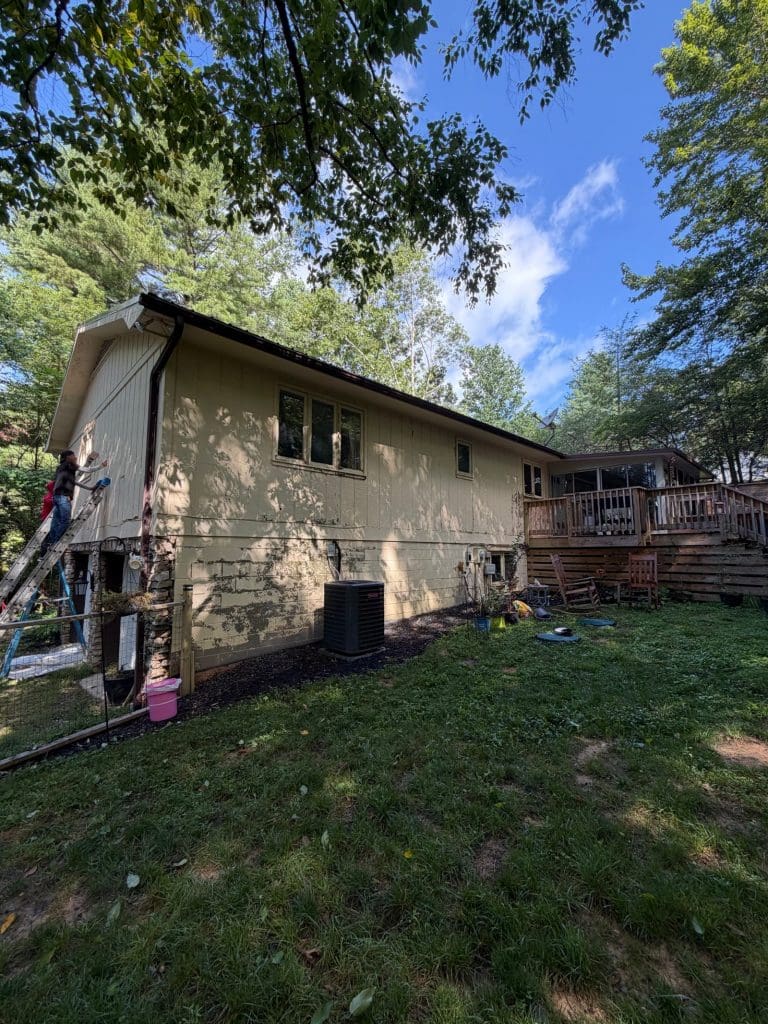
You can see it in the before photos from the side elevation: color that had gone flat and chalky in places, with cracking visible across the body of the house.
Paint that looks like this isn't just a cosmetic problem, though that's usually what gets a homeowner to pick up the phone. A finish in that condition has already lost its seal. Once the film cracks, water finds its way behind the coating and into the substrate, and from there the damage moves from the paint to the wood underneath. The yellow had reached that point.
Nothing about the house was failing structurally. It needed the same thing most exteriors in Western North Carolina need somewhere between year eight and year twelve: a real prep job and a fresh coating system that could take another decade of sun, rain, and freeze-thaw.
Homeowners usually sit on a project like this longer than they should, and the reason is understandable. A faded wall still looks like a wall. There's no leak, no broken window, nothing forcing the issue, so the repaint keeps sliding down the list behind things that feel more urgent. The cost of waiting doesn't show up until a painter pulls a loose board and finds the damage runs further than anyone expected.
The Problem: A Finish That Had Quit Early
Exterior paint fails in a pattern, and this house was showing most of it at once.
Fading comes first. UV breaks down the pigment and the color goes dull and uneven, usually worst on the elevations that take the most direct sun. Cracking follows as the paint film loses its flexibility and stops moving with the wood through seasonal expansion and contraction. After that comes the part nobody wants to deal with: moisture getting behind the coating, soft spots in the trim, and rot that has to be cut out and replaced before anything else happens.
The homeowner here caught it at the right stage. There was wood that needed replacing and there were areas that needed filling, but the repairs were manageable rather than a full re-side. Waiting another two or three seasons would have changed that math.
A dark color was the other half of the request. Going from a light yellow body to a dark, near-black finish is a significant jump, and it only works if the surface underneath is sound. Dark colors sit hotter in direct sun and they hide nothing. Every ridge of old paint you leave behind, every seam you skip, shows up in the finished wall.
The Solution: Prep First, Paint Second
Most of the labor on this project happened before a single finish coat went on. That's normal for an exterior repaint done properly, and it's the part homeowners rarely see in a before-and-after photo.
Scraping and Sanding the Failing Paint
Every bit of paint that had lost its bond came off. The crew scraped the failing areas back to sound material, then sanded the transitions so the edges between old coating and bare substrate wouldn't telegraph through the new finish.
This step is slow and there's no shortcut around it. New paint only holds as well as whatever it's sitting on, so leaving a cracked or lifting layer in place just buys you a finish that starts peeling on the same schedule the old one did. Sanding the scraped edges matters just as much, particularly with a dark color going over the top.
Bondo Repairs and Rotted Wood Replacement
Where the surface had been damaged but the material was still solid, the crew made Bondo repairs and sanded them flush. Where the wood was gone, it got replaced.
That distinction is the whole judgment call on an exterior like this. Filler belongs in a gouge, a nail hole, or a damaged section of otherwise sound trim. It does not belong over rot, because filler doesn't stop rot from spreading and you'll be back at the same board in two years with a bigger problem. Deteriorated wood on this house was cut out and swapped for new material before anything was coated.
Caulking Gaps and Joints
Open joints got caulked and sealed. Siding seams, trim intersections, the gaps around windows and doors: anywhere water could get in behind the finish.
Caulk is doing real work on an exterior, not cosmetic cleanup. It's the barrier between a sealed wall and a wall that's quietly taking on moisture every time it rains. Skipping it is one of the most common reasons a repaint that looked great in month one starts failing around the joints by the second winter.
Applying the Finish
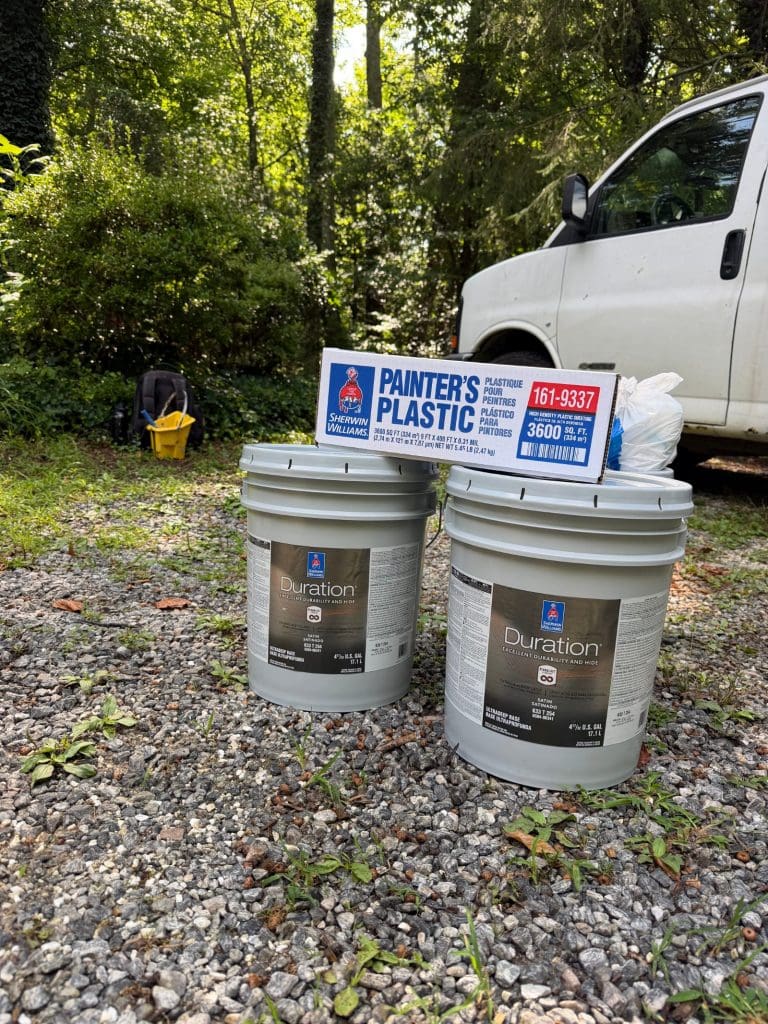
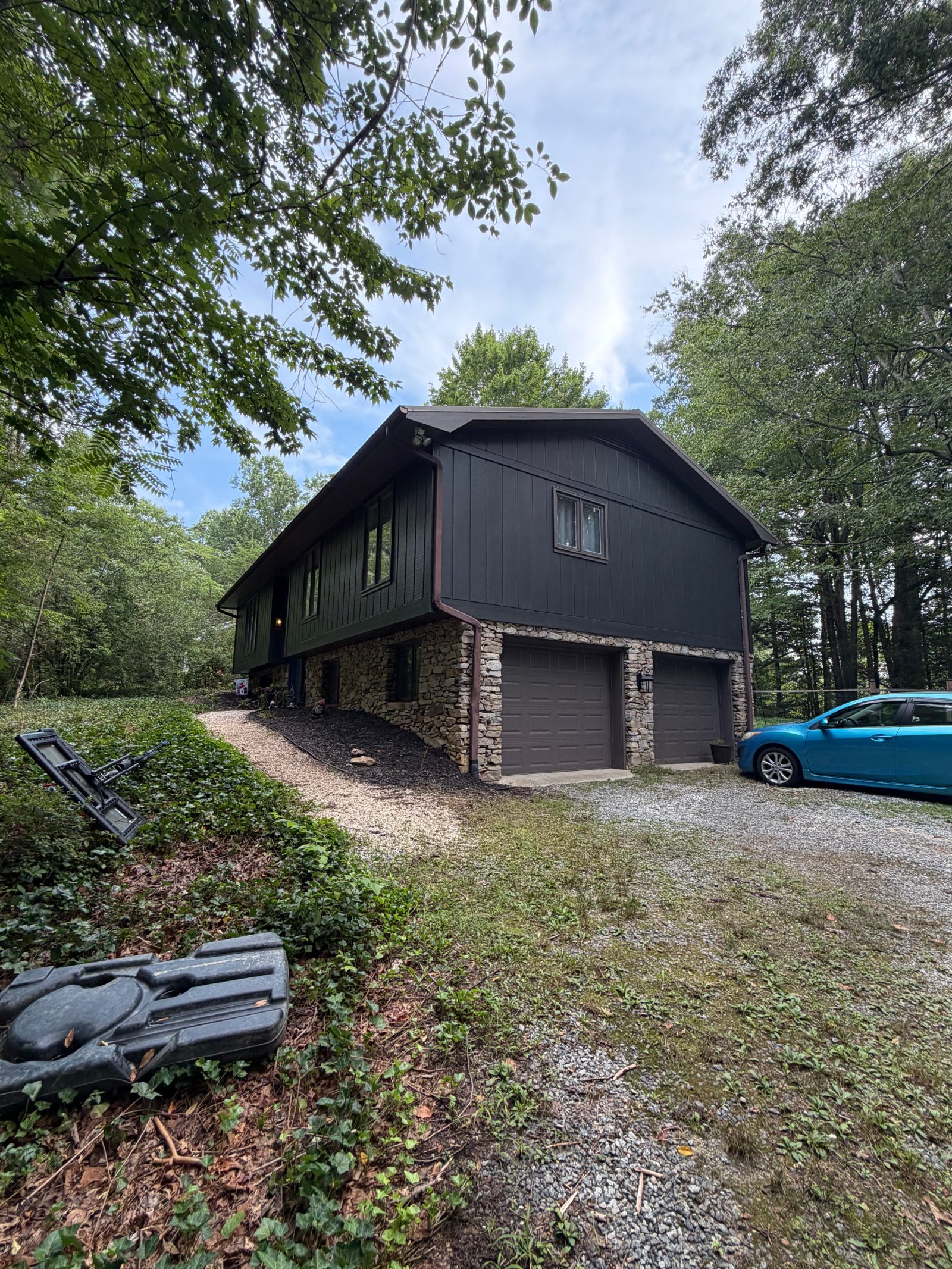
With the surface repaired, sanded, and sealed, the house was coated in Sherwin-Williams Duration Exterior in a satin finish, in a custom dark, near-black color the homeowner selected.
A2 Painting applies two full coats by default on exterior work. Satin was the right call here for a dark body color: it holds up to washing, sheds water, and carries enough sheen to read cleanly in daylight without turning the whole house into a mirror. Scope covered the full exterior.
Before & After
After: A House That Reads Completely Different
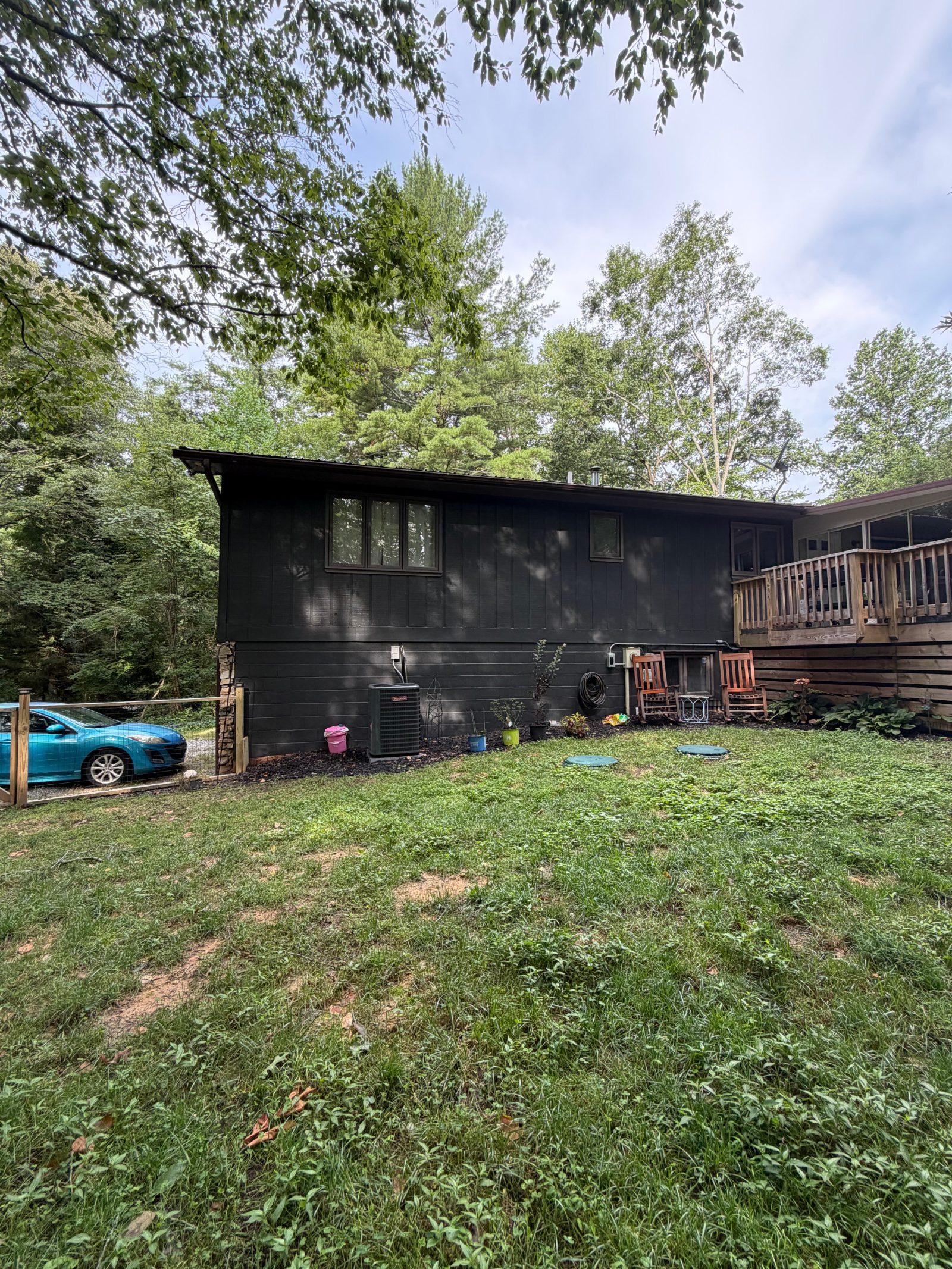
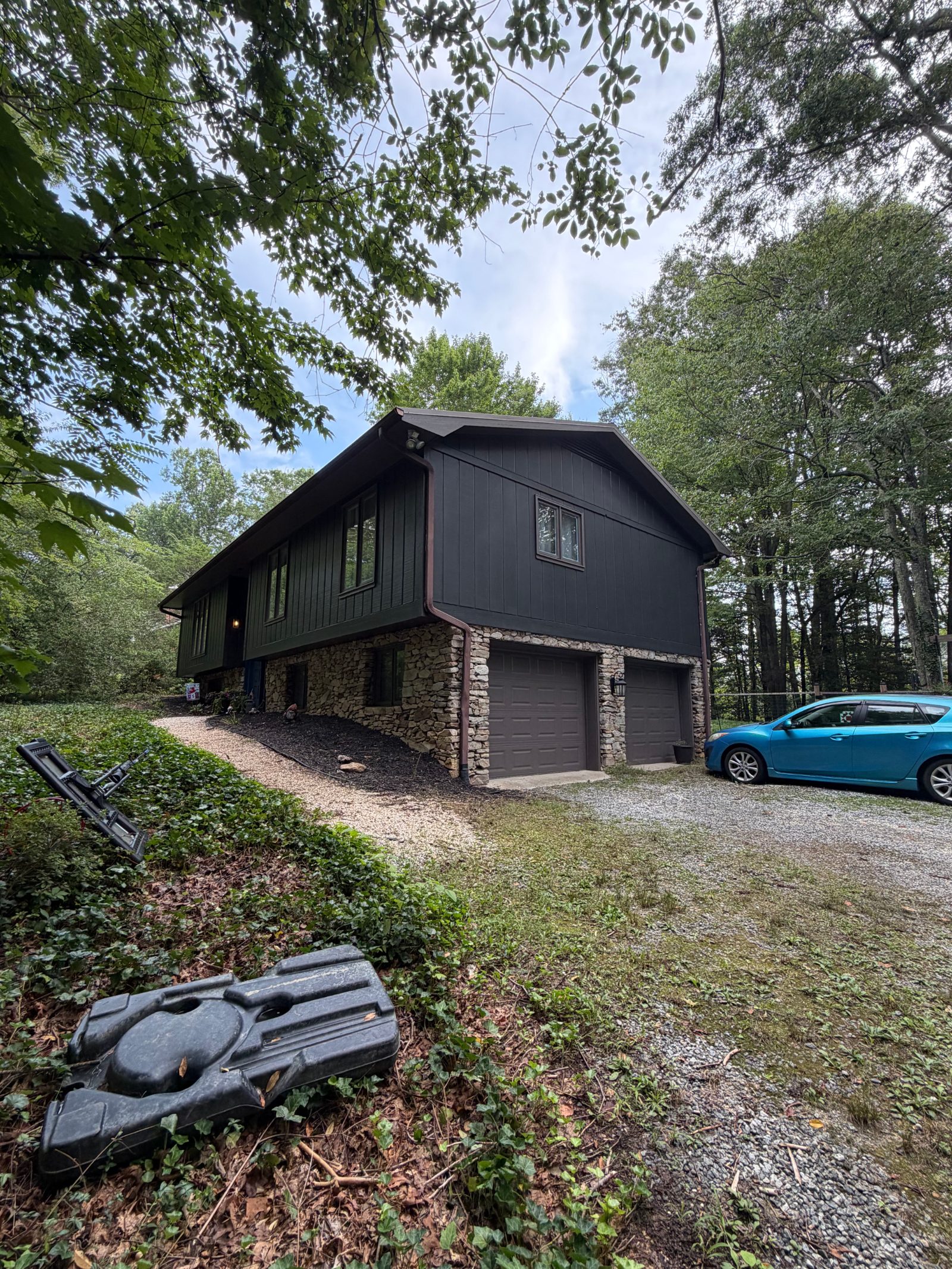
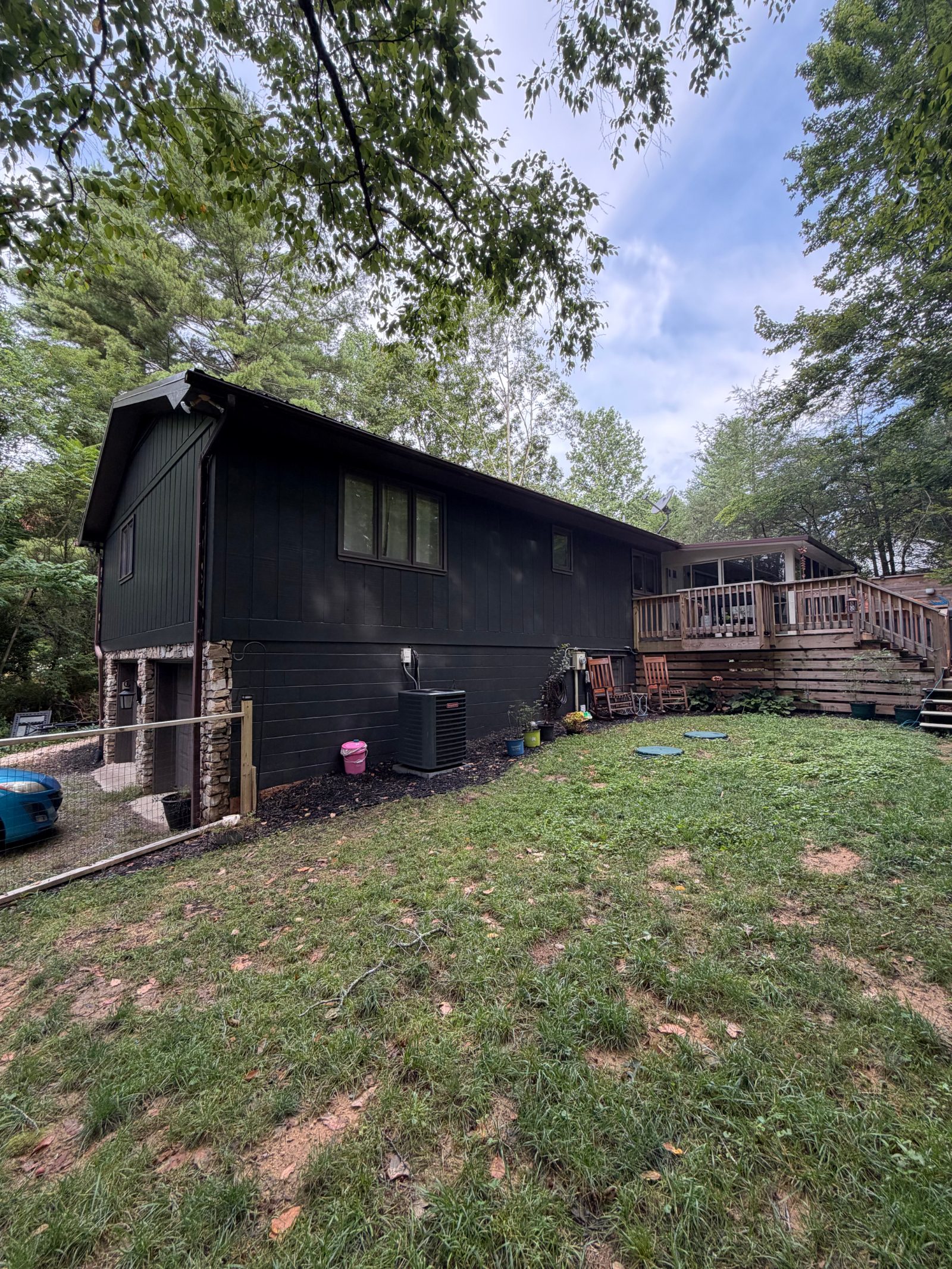
The jump from faded yellow to a dark, near-black exterior changed the house entirely. Same structure, same footprint, and from the street it's an entirely different building. The after photos from the matching side and front-garage angles tell that story better than any description.
Underneath the look, the house is sealed. Repaired wood, filled damage, caulked joints, and a fresh exterior coating system standing between the substrate and the next decade of Western North Carolina weather. That's the part that pays for itself.
Maintenance on a finish like this one is simple. Rinse the walls once a year to keep dirt and pollen from building up in the film, keep shrubs trimmed back far enough that nothing sits wet against the siding, and look over the caulk lines each spring. Catching one open joint early is a fifteen-minute fix. Ignoring it for three seasons is how you end up back at scraping and wood replacement.
Every A2 Painting project carries a 2-year written workmanship warranty.
Location: Exterior Painting in Saluda, NC
Saluda sits out on the eastern edge of the region A2 Painting works. The home base is Hendersonville, and projects run regularly through Tryon, Columbus, Brevard, and the rest of Western North Carolina.
Elevation is why exterior paint in this part of the state fails the way it does. Homes up here take harder UV exposure than the same house would at lower elevation, mountain humidity stretches drying times, and the freeze-thaw cycle works on every unsealed joint through the winter. A coating that would hold fine somewhere flatter and drier gives up early here, and the houses that last are the ones where somebody did the prep.
There are no subcontractors and no rotating crews. The team that starts your exterior is the team that finishes it.
Products and Techniques Used
Coating: Sherwin-Williams Duration Exterior, satin finish, in a custom dark color selected by the homeowner.
Surface prep: Scraping and sanding of all failing paint, Bondo repairs to damaged surfaces, replacement of rotted wood, and caulking of gaps and joints across the exterior.
Application: Two full coats across the full exterior.
A2 Painting works with Sherwin-Williams coating systems on every project.
Planning an Exterior Repaint of Your Own?
If your paint is fading, cracking, or lifting at the seams, the repair list only gets longer from here. A walkthrough and a written quote cost you nothing, and you'll get a straight answer about what the house actually needs instead of a sales pitch.
Call (828) 702-0636 or request a free quote and Alex will come out, look at the exterior, and put real numbers on paper. You can also browse more exterior painting projects and see the rest of the work in the project gallery.